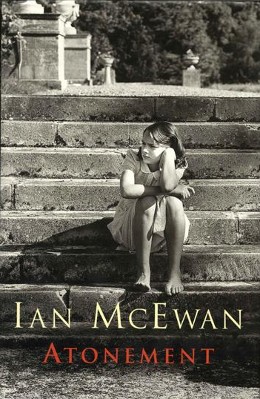
I read the words from the Offertory so many times during Mass when I was growing up that even now they fall onto the (virtual) page with little effort. Reading Ian McEwan's nove Atonement, the Offertory came back to me again and again. As a child, it seems I was guilty of "numberless" sins. Oh great! Not only was I on the road straight to Hell, I was paving it. Confession was the only way to cleanse my soul of the gray marks of venial sin and the blackness of (shudder) mortal sin. Back then I pictured my soul looking like a boxer's punching bag, floating with little wings to keep it steady. I suppose it may have been made of muslin; I could never see it in my mind's eye as pure white and shimmery like satin.
In the novel, Briony's attempt at atonement consumes her entire adult life, even though she wasn't a Catholic. Upon her death, I wonder whether her soul took a dive into the depths of Hell, or if it soared gloriously to the side of her Maker? When I confessed my numberless sins of childhood to a priest in the confessional, I sometimes added on to the count, although I doubt I actually kept track anyway: "Father, I lied six times. I was mean to my brother four times." Then the perfunctory, "For these and the sins I have forgotten, I am truly sorry." I suspect the innocent lies I told the priest about the number of venial sins I committed won't keep me out of Heaven, or wherever my punching bag soul is destined. Briony, on the other hand, ruined lives with her lie, while ultimately profiting from that same lie. I'm not so sure she's atoned for her sin. Suffered? yes. Atoned? maybe not.
The story is set during World War II, and if you don't already know it, war IS hell.